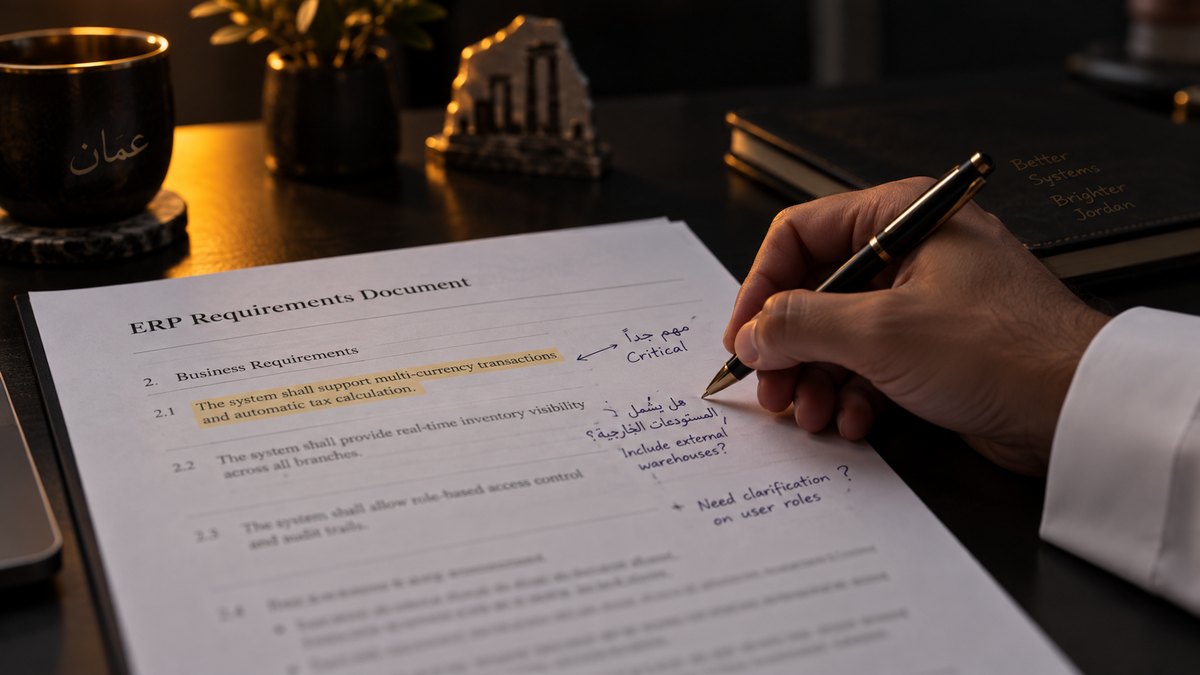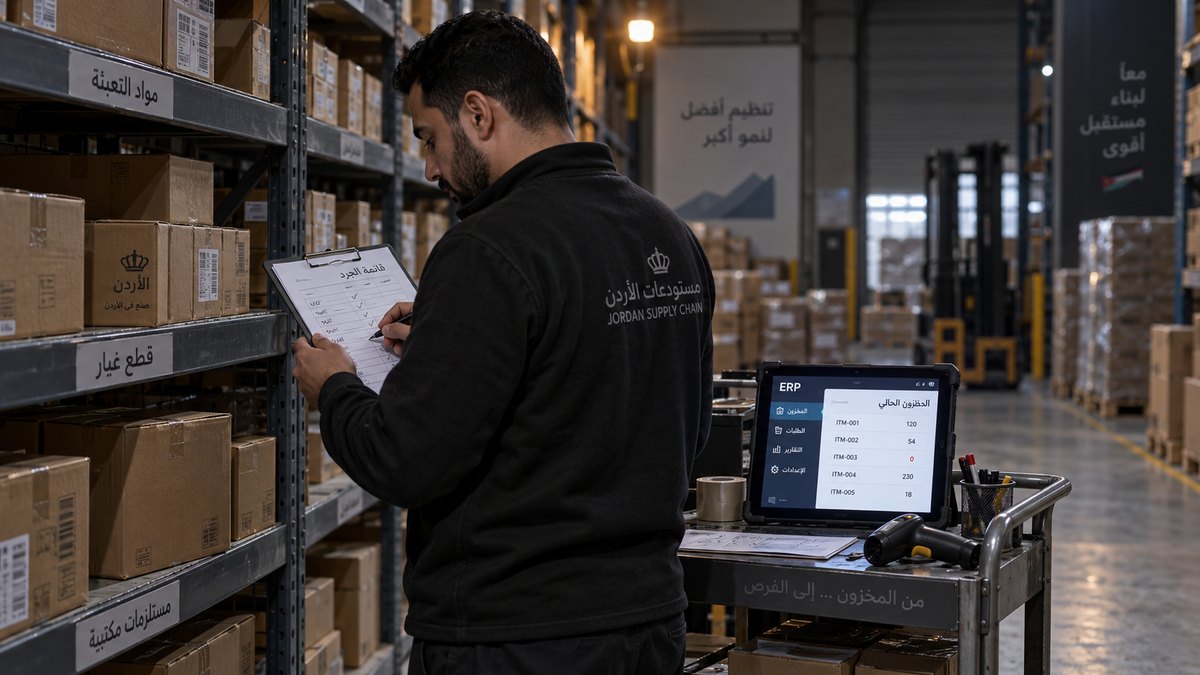
Almost every ERP shortlist we review in Jordan comes down to the same pair: Odoo on one side, SAP Business One or Dynamics on the other. Odoo vs SAP gets framed as a features argument. It almost never is.
Both products will run your finance, inventory and sales. The features overlap far more than either vendor will admit. What actually differs is cost structure, how change is handled, and who you depend on afterwards.
The real difference: who owns the change
With Odoo, the source is open. A competent developer in Amman can modify behaviour, add a field, change a workflow. That is freedom and it is also risk — the same freedom lets a previous contractor leave you with modifications nobody documented.
With SAP Business One, you configure within boundaries. You cannot break the core, which is genuinely protective. But when the boundary sits exactly where you need flexibility, the answer is an expensive add-on or a flat no.
Where each one wins
Odoo suits you when
- Your processes are unusual and you are not willing to change them to suit software.
- You have or can hire technical capability, in-house or through a partner you trust long-term.
- Budget matters more than support guarantees, and you accept that trade.
- You want to start with two modules and grow into the rest.
SAP Business One suits you when
- You are in a regulated sector where auditability matters more than flexibility.
- Your processes are conventional and you would rather adopt a proven pattern than defend a bespoke one.
- You need a vendor with a service agreement and a name your board recognises.
- You have multi-currency or multi-entity consolidation from day one.
The Jordan-specific questions
Regional comparisons skip these, and they decide more projects than any feature matrix.
JoFotara integration
Ask for a reference where the vendor has integrated with Jordan's e-invoicing platform, and ask to speak to that client. "We can do it" and "we have done it" are different statements with a five-figure gap between them.
Arabic document quality
Ask to see a printed invoice in Arabic, produced by the system, before you sign anything. Many implementations that claim Arabic support produce documents with reversed number ordering or Latin-aligned totals. This is what your customers receive.
Local partner depth
This is the question that matters most and gets asked least. How many consultants does the partner actually have in Jordan? If the answer is two, your project depends on two people's calendars and on neither of them leaving.
The cost shape, not the cost
Odoo generally starts cheaper and stays flat. Mid-market products start higher and include more. Over five years the totals converge more than either camp claims — what differs is when you pay and how predictable it is.
If cash flow matters more than certainty, that favours the open-source path. If an unbudgeted invoice in month eighteen would be a serious problem, that favours the licensed one.
How to settle Odoo vs SAP
Stop comparing the products. Write down your five most awkward processes — the ones that make your business yours rather than generic. Then ask each vendor to demonstrate those five, with your data, in a session you attend personally.
The Odoo vs SAP question resolves itself in that room. One of them will show you something close to what you already do. The other will explain why you should do it differently. Either answer can be the right one; you simply need to know which you are buying.